
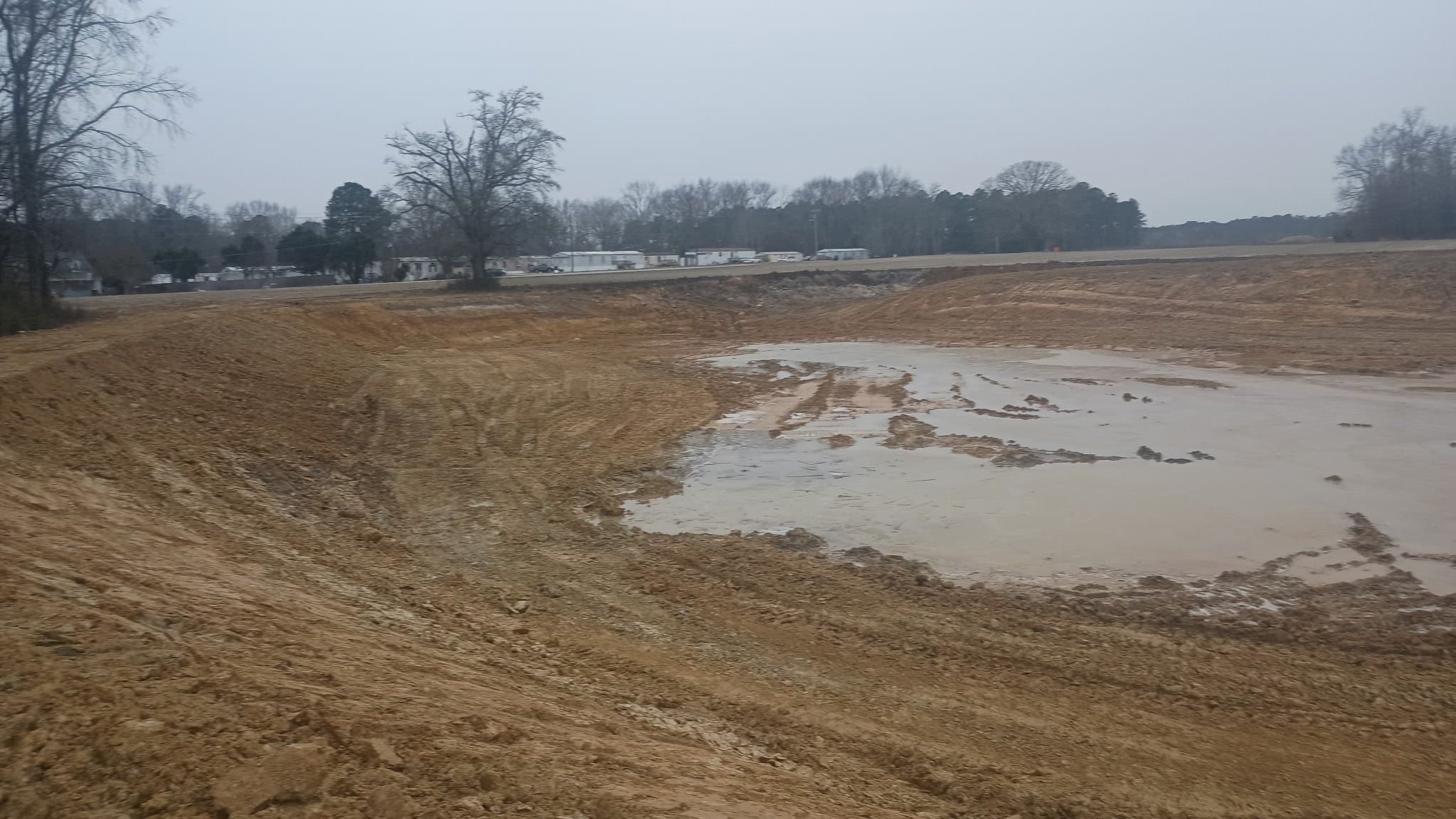
Pond Building in Raleigh, Durham & the Triangle
Farm ponds, recreational ponds, and stormwater basins built to hold water and last, shaped by a veteran-owned crew with 30+ years on heavy equipment across Wake, Johnston, and Durham counties.
Building a pond that actually holds water in the North Carolina Piedmont is part dirt work, part water management, and part knowing the ground you're digging into. A pond is only as good as the soil under it and the way it's shaped. We've seen plenty of homemade ponds around the Triangle that leak away every summer or wash out their dam in the first heavy storm, almost always because the siting, the core trench, or the spillway were never done right. Clearly Leveled Up builds ponds the way they're supposed to be built, starting with an honest look at your ground before anyone moves a bucket of dirt.
The good news for property owners around Raleigh, Apex, Wake Forest, and out into Johnston County is that our red clay subsoil is some of the best natural pond-sealing material there is. When it's compacted correctly, Piedmont clay forms a tight liner that holds water without an artificial membrane. The trick is finding it, keeping the organic topsoil and sandy seams out of the basin and dam, and compacting it in lifts so it actually seals. That's where a careful operator earns their keep, and it's the difference between a pond you swim in for decades and a mud hole that drains by August.
Whether you want a farm pond for livestock and irrigation, a recreational pond for fishing and family, or an engineered retention or detention basin to satisfy a stormwater permit, the fundamentals are the same: right location, right shape, a properly keyed dam, and a spillway sized to move water safely when the big rains come. We handle the earthwork end of all of it with a JCB compact track loader and the right attachments, and we'll tell you straight what your site can and can't support.
What's Included
Farm & Recreational Ponds
Dug and embankment ponds for fishing, swimming, irrigation, and livestock water. We shape proper depth zones, gradual swim-end banks, and steeper fish-holding water so your pond works for how you'll actually use it.
Retention & Detention Basins
Stormwater basins shaped to plan to meet NC stormwater and erosion-control requirements. Wet retention ponds that hold a permanent pool or dry detention basins that drain down between storms, graded to the engineered contours.
Dam & Spillway Shaping
Keyed-in earthen dams built in compacted lifts with a proper core trench, plus principal and emergency spillways sized to pass storm flow without overtopping or cutting a gully through your embankment.
Bank Grading & Stabilization
Stable side slopes that resist slumping and erosion, shaped to hold seed and matting. We grade banks to a slope you can mow and that won't cave in the first time the water level drops in a dry NC summer.
Clay Pond Sealing
Locating, placing, and compacting native Piedmont clay to line the basin and stop seepage. Where on-site clay is thin or sandy, we'll tell you and lay out the options instead of letting you find out after the pond won't fill.
Sizing & Siting
On-site evaluation of drainage area, soils, slope, and access to put the pond where it belongs. Good siting decides whether a pond fills on its own, stays full, and stays out of trouble with neighbors and regulators.
How It Works
- 01
On-Site Walk-Through & Estimate
We meet you on the property, walk the drainage, look at the slope and likely soils, and talk through how you want to use the pond. You get a free written estimate and an honest read on whether the site will hold water before you spend a dime on dirt work.
- 02
Siting, Layout & Permitting Check
We pin down the best location, footprint, and depth for your watershed and flag anything that triggers NC rules, like the one-acre land-disturbance threshold for erosion control or Dam Safety review on larger impoundments, so there are no surprises mid-project.
- 03
Excavation, Core Trench & Dam
We strip and stockpile topsoil, cut a core trench down to tight clay, then build the basin and dam in compacted lifts of select clay so the structure seals and stays put. The spillway gets shaped and sized as the dam goes in, not as an afterthought.
- 04
Banks, Spillway & Stabilization
We finish the side slopes, set the principal and emergency spillways, spread topsoil back on the embankment, and grade for seeding and erosion-control matting so the banks lock in and the pond is ready to fill.
Local Know-How, Done Right
Pond building in the Triangle is shaped by the ground under our feet and the rules over our heads. The Piedmont red clay around Raleigh, Cary, Apex, and out into Johnston and Durham counties is a gift for pond builders when it's used right, since well-compacted clay seals a basin without a liner, but the same red clay turns slick and slumps if banks are cut too steep or stripped of cover before grass takes hold. Our humid summers and downpour-style thunderstorms mean a spillway has to be sized for real Carolina rain, not a fair-weather trickle, and dry spells in late summer test whether your pond was dug deep enough to hold through a drought. There are real regulatory lines too: disturbing an acre or more of land triggers North Carolina's Sedimentation Pollution Control Act and an erosion-control plan, larger embankments can fall under the state Dam Safety Law, and ponds near streams, wetlands, or drainage ways can draw buffer and stormwater requirements. We know how these realities play out on Triangle properties and build with them in mind from the first walk-through.
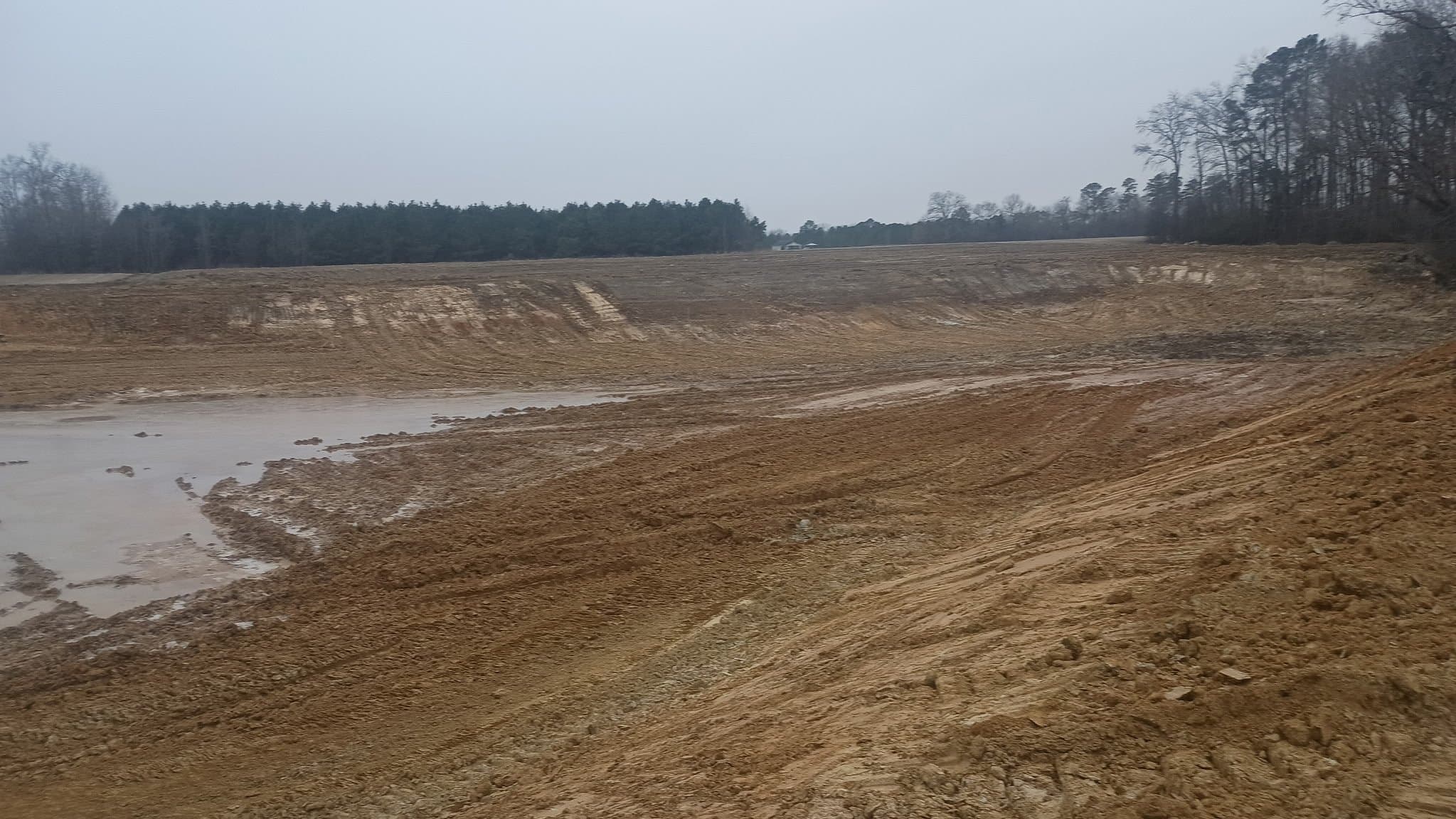
Pond Building Questions
Will my pond hold water, or do I need a liner?
In most of the Triangle the answer is yes without an artificial liner, because our native Piedmont clay seals well when it's placed and compacted correctly. We check your soils on the walk-through. If the clay is thin or too sandy to seal on its own, we'll tell you up front and lay out options like importing clay or bentonite rather than letting you find out after it won't fill.
Do I need a permit to build a pond in Wake or Johnston County?
It depends on size and location. Disturbing an acre or more of land triggers North Carolina's erosion-control requirements, larger dams can fall under the state Dam Safety Law, and ponds near streams or wetlands may involve buffer or stormwater rules. We flag what applies to your project during siting so you go in with eyes open. We handle the earthwork; an engineer or surveyor may be needed for permitted designs.
How big and how deep should my pond be?
That comes down to your watershed and how you'll use it. A pond needs enough drainage area to fill and stay full through a dry NC summer, and recreational and fishing ponds generally want a deep section of eight feet or more to keep water healthy and discourage weed takeover. We size depth and footprint to your site rather than to a one-size number.
What's the difference between a retention and a detention basin?
A wet retention pond holds a permanent pool of water and is often what people picture as a stormwater pond, while a dry detention basin stays empty between storms and drains down over a set time to control runoff. Which one your project needs is usually dictated by the engineered stormwater plan, and we build to those contours and elevations.
Can you turn an existing leaky or silted-in pond around?
Often, yes. Many older Triangle ponds leak because the dam was never keyed in or the basin was never compacted, and others have simply silted up over the years. We can evaluate the dam, spillway, and basin, re-excavate and re-compact where needed, and re-shape banks to get a tired pond holding water and draining safely again.
What areas do you build ponds in?
We build ponds throughout the Raleigh-Durham Triangle, including Raleigh, Durham, Cary, Apex, Wake Forest, Garner, Clayton, Holly Springs, Fuquay-Varina, Chapel Hill, and the surrounding Wake, Johnston, and Durham county areas. Call (919) 770-9404 for a free on-site walk-through and written estimate.
Related Services
Ready to Get Leveled Up?
Free on-site walk-through and a written estimate across The Triangle & surrounding counties, North Carolina. No obligation.