
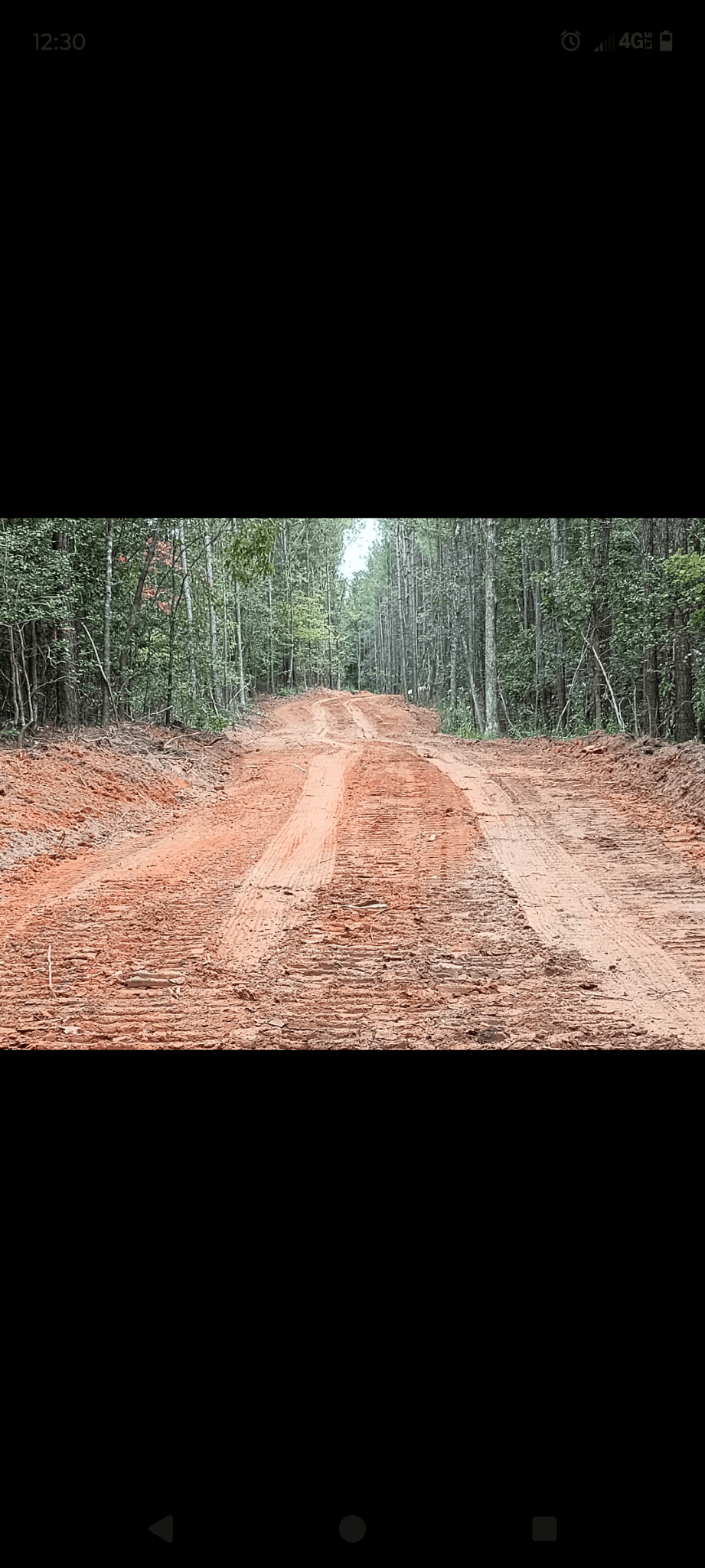
Driveway & Gravel Road Prep in Raleigh, Durham & the Triangle
Cut, crowned, compacted, and stoned access roads and driveways built to shed Carolina rain and carry real weight — done right the first time by a veteran-owned crew with 30+ years on the equipment.
A driveway is only as good as what is underneath it, and in the Triangle that means starting with a plan for our red clay. Wake, Durham, and Johnston County soils are heavy and slow to drain, so a drive that was simply dumped on top of bare ground turns to soup the first wet week and rutts out by spring. We cut down to a stable subgrade, shape a proper crown so water runs off instead of pooling, lay a compacted stone base, and tie in drainage so the road sheds water the way it is supposed to. The difference is a surface that holds up to delivery trucks, equipment, and daily traffic for years instead of one season.
We handle the full range of rural and residential access work: new driveway cuts from the road to the house pad, long gravel farm and field roads, shared private lanes, and the repair of drives that have already washed out. That includes the parts most people forget until they are a problem — culverts under the entrance so the roadside ditch keeps flowing, ditch and swale shaping to carry runoff away from the travel surface, and the right stone in the right order, from a coarse ABC base up to a clean driving course. Every job gets compacted in lifts, not just bladed smooth, because compaction is what keeps gravel from migrating and potholing under load.
We work out of the Raleigh-Durham area and serve Cary, Apex, Wake Forest, Garner, Clayton, Holly Springs, Fuquay-Varina, Chapel Hill, and the surrounding Wake, Johnston, and Durham county communities. Whether you need a brand-new drive for a build site, a reliable road back to a barn or pond, or a permanent fix for a drive that floods every storm, you get a free on-site walk-through and a clear written estimate before any blade hits the ground.
What's Included
New Driveway Cut & Install
Fresh driveways cut from the road to your home, garage, or build pad — excavated to a firm subgrade, crowned, and stoned so it drives clean and drains right from day one.
Gravel Road Grading & Reclamation
Grading and re-shaping for long farm lanes, field roads, and shared drives. We blade out ruts and potholes, re-establish crown, and add stone where the base has thinned or disappeared.
Crown, Stone Base & Compaction
A proper layered base — typically compacted ABC stone topped with a clean driving course — built in lifts and rolled tight so gravel stays put instead of migrating and washboarding under traffic.
Culvert & Pipe Installation
Driveway culverts sized and set so the roadside ditch keeps flowing and your entrance never dams up water. We bed the pipe, set proper fall, and stone the headwalls so it holds.
Ditch, Swale & Drainage Work
Roadside ditches and swales cut and shaped to pull runoff off the travel surface and away from your drive — the single biggest reason a gravel road lasts or fails in our wet, clay-heavy soil.
Washed-Out Drive Repair
Permanent fixes for drives that rut, flood, or wash out every storm. We diagnose why it is failing — usually no crown, no base, or no drainage — and rebuild it so it stops happening.
How It Works
- 01
Walk the drive & find the water
We walk the full run with you, check where water collects and where it should go, probe the existing base, and identify whether the problem is grade, stone, or drainage. Then you get a clear written estimate.
- 02
Cut subgrade, shape grade & crown
We strip soft soil down to a stable subgrade, establish the right slope from the road, and shape a crown or cross-slope so water sheds to the ditches instead of standing in the wheel tracks.
- 03
Set culverts & cut drainage
Any culverts go in at the right depth and fall, and we cut or re-shape ditches and swales so runoff has a clear, lined path off the road before a single load of stone is placed.
- 04
Stone, compact & finish
We place stone in compacted lifts — base course first, driving course on top — roll it tight, and blade the finished surface smooth. We walk the completed drive with you before we leave.
Local Know-How, Done Right
In the Triangle, almost every driveway failure traces back to the same two things: red clay that holds water and storms that drop a lot of it fast. Clay subgrade does not drain, so without a crown and a compacted stone base, water sits under the gravel, softens it, and the surface ruts and washes out — usually right at the road entrance and on any slope. That is why we treat drainage as the heart of the job, not an afterthought. Properly sized culverts keep the roadside ditch moving, cut swales carry runoff off the travel lane, and a true crown sends water to the edges where it belongs. It also keeps you on the right side of Wake, Durham, and Johnston County stormwater and driveway-permit expectations, including erosion control on disturbed ground and not blocking the public ditch line at your entrance. Build it for our soil and our rain and it lasts; ignore them and you will be re-grading every spring.
Roadway & Driveway Prep Questions
Why does my gravel driveway keep washing out every time it rains?
Almost always it comes down to no crown, no compacted base, or no drainage. On Triangle red clay, water that cannot run off to the sides or into a ditch sits under the gravel and carries it away. We rebuild with a proper crown, a layered stone base, and ditches or a culvert so the water has somewhere to go and the surface stays put.
What kind of gravel do you use for driveways here?
For most Triangle drives we build a base of compacted ABC stone (crusher run) for strength, then top it with a cleaner driving course like #57 or #78 for a smooth, lockable surface. The exact mix depends on traffic, slope, and how soft the subgrade is — we spec it after walking the site.
Do I need a culvert at my driveway entrance?
If there is a roadside ditch where your drive meets the road, yes — a culvert lets that ditch keep flowing under your entrance instead of damming up and flooding the road or your drive. We size and set it with proper fall and stone the ends so it holds. County or NCDOT entrance permits sometimes require it, and we can advise on that during the walk-through.
How long does a new driveway install take?
A typical residential driveway cut and stone install runs one to two days once we start, depending on length, how much cut is needed, and whether culverts or ditch work are involved. Longer farm and field roads or wet, soft subgrade can add time. You get a firm timeline with your written estimate.
Can you fix a steep driveway that ruts and slides?
Yes. Steep drives in our clay are tough because water runs fast and scours the surface. We address it with the right grade and crown, heavier compacted base stone, water bars or cross-drains to break up the flow, and ditching along the high side. In some cases a paved or concrete strip on the steepest pitch is the better long-term call, and we will tell you straight if that is the case.
Do you serve rural properties outside the main Triangle towns?
We do. Long driveways and gravel roads back to barns, ponds, build sites, and hunting tracts are a big part of what we do across Wake, Johnston, and Durham counties — Clayton, Fuquay-Varina, Wake Forest, and the surrounding rural areas included. Call (919) 770-9404 to check that you are in range.
Related Services
Ready to Get Leveled Up?
Free on-site walk-through and a written estimate across The Triangle & surrounding counties, North Carolina. No obligation.